


Holy Week is one of Spain's most emblematic traditions: processions, penitents, saetas (flamenco-style religious songs), and torrijas (a type of French toast). But behind the floats lies a history of Holy Week that very few know. Who was Jesus of Nazareth, really? Why do the penitents wear pointed hoods? And why does the date change every year?
In this article, we journey beyond the processions to discover the truth, with rigor and a touch of humor. Get ready, because what you're about to read might change your perspective on Holy Week.
Who was Jesus of Nazareth… really?
Let's start with the name. "Nazarene" means, first and foremost, "native of Nazareth," the small town in Galilee where, according to the Gospels, Jesus grew up. That is why he is known as Jesus of Nazareth or Jesus the Nazarene. This is also recorded in the Dictionary of the Spanish Language.
Be careful, because there is an almost identical word that complicates everything: "Nazarene", from Hebrew Nazi, The word "Nazirite" means "consecrated to God." Nazarenes took special vows, such as not cutting their hair or drinking wine (does Samson and his long hair ring a bell?). However, Jesus wasn't a Nazarene: the Gospels show him drinking wine, and even turning water into wine at a wedding in Cana. In short, if he had been a Nazarene, that wedding would have ended with a watery celebration.
Galilee: the biblical "Burgos" where the story of Holy Week begins
Jesus grew up in Galilee, Nazareth, a rural and mountainous region north of Judea. According to the Gospels of Matthew and Luke, he was born in Bethlehem, although many historians believe he may have been born in Nazareth itself.
At that time, the region was under Roman rule, and Jewish society was divided among Pharisees, Sadducees, Essenes, Zealots… and, of course, the occasional preacher who certainly made his presence known. It was in this context that Jesus began to preach about love, forgiveness, and the Kingdom of God. Moreover, he did so using simple parables, full of examples from the countryside and fishing, to reach ordinary people.
The Sermon on the Mount: The first viral monologue?
One of the most famous scenes is the Sermon on the Mount, in which Jesus pronounces the Beatitudes. If we look at it with today's eyes, it had everything a good monologue needs:
- He spoke in everyday language.
- He used metaphors from the countryside and the sea.
- He hid profound messages in easy-to-remember stories.
If he were alive today, he would probably have his own YouTube channel full of parables.
Betrayal, trial and resurrection: the story of Holy Week, day by day
The life of Jesus culminates in one of the most dramatic turns ever told. And Holy Week recounts it step by step:
- Palm Sunday: He enters Jerusalem amidst palms and olive branches.
- Holy Thursday: He celebrates the Last Supper with his disciples and, that same night, Judas betrays him for thirty pieces of silver.
- Good Friday: After a summary trial before Pontius Pilate, he died crucified.
- Easter Sunday: On the third day… he rises again!
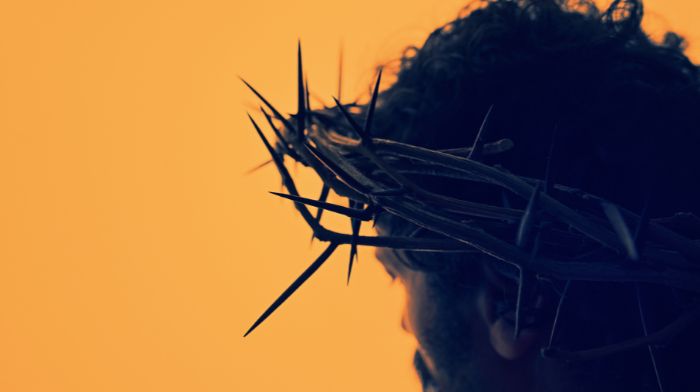
This outcome not only changed the lives of his followers, but also gave rise to Christianity as we know it today. That is why Holy Week commemorates these events and reminds millions of people of the value of faith, sacrifice, and hope.
Why does Easter change dates every year?
It's all the moon's fault. Easter Sunday is celebrated on the Sunday following the first full moon of spring. That's why it can fall on any date between March 22nd and April 25th.
In 2027, for example, Palm Sunday will be on March 21st and Easter Sunday on March 28th. It will therefore be an early Holy Week, so it's advisable to plan your trip well in advance.
And what are the Nazarenes doing in Holy Week today?
The Nazarenes The figures you see in Spanish processions, with long robes and pointed hoods, owe their name to Jesus of NazarethThese are the penitents who accompany the image, carrying the cross on their backs. Their habit derives from the penitential garments that spread through the brotherhoods between the 16th and 17th centuries.
And the pointed hat has a curious history. During the Inquisition, those condemned were forced to wear a tall, conical hat to mark them in public. Later, religious brotherhoods turned it into a symbol of voluntary penance: the cloth covering the face allows for anonymous penance, and the pointed shape, according to tradition, brings the penitent closer to heaven.
So, when you see a procession full of penitents, you're witnessing a tradition with over four centuries of history. And no, it has nothing to do with the biblical Nazarenes… or their long hair.
Interesting facts about the history of Holy Week in Spain
- Seville, Malaga, Zamora and Valladolid They have Holy Weeks declared of International Tourist Interest.
- Many brotherhoods preserve floats and images that are centuries old, authentic treasures of Baroque art.
- In Catalonia, godparents give the Easter cake to their godchildren, and on Easter Monday it's time to eat it as a family. Before, it was a bun decorated with hard-boiled eggs; today it's usually a cake or a chocolate figure.
- In Barcelona, the Passion façade of the Sagrada Familia depicts Holy Week in stone, from the Last Supper to the burial of Jesus. We explore it in detail in our Sagrada Familia tour.
HL Comedy Tours: laughing with history, not at history
In HL Comedy Tours and in History We love history with all its light and shadows. We enjoy discovering its curious corners, its human contradictions, and, of course, the humor that also beats in every story.
Because if the story of Jesus and Holy Week demonstrates anything, it is that behind every great event there are real people: with doubts, hopes, mistakes... and even a bit of good humor, if you know how to look.
👉 Book your humorous history tour of Barcelona and discover the city as you've never been told before.