


2026, the centenary of Gaudí
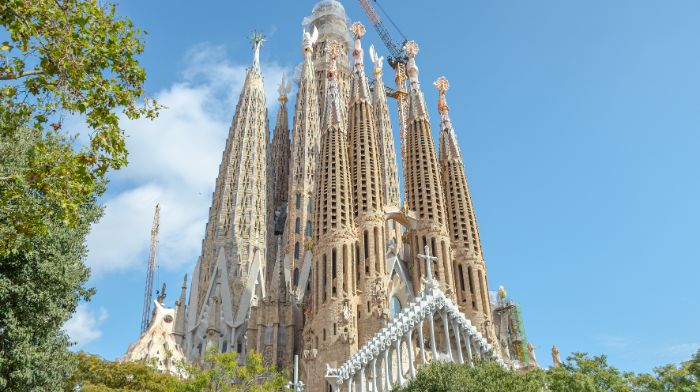
This year, Barcelona celebrates the Gaudí centenary, Gaudí, one of history's most visionary architects. His masterpiece, the Sagrada Familia, is still under construction almost a century after his death, as if Gaudí himself had left an open mission for the future.
2026 is not just another year: it's the Gaudí's year, Full of exhibitions, cultural events, and unique opportunities to discover the man behind the myth. And yes, also to visit the Sagrada Familia with a different perspective.
1. Humble origins of an misunderstood genius
Antoni Gaudí was born in 1852 into a family of coppersmiths in Catalonia, an environment where metal, fire, and curved forms were part of everyday life. This exposure to craftsmanship, manual precision, and the transformation of rigid materials into flexible structures profoundly shaped his way of thinking. Before imagining buildings, Gaudí learned to understand how matter works.
His childhood was marked by poor health. Severe bouts of rheumatism prevented him from running and playing like other children, forcing him to spend long periods resting. But this limitation became one of his greatest strengths: he developed an uncommon capacity for observation. While other children played, he studied how plants grow, how a branch bends without breaking, or how certain patterns repeat themselves in nature with an almost mathematical harmony.
That calm and analytical gaze allowed him to discover that nature is not only beautiful, but also efficient. He observed natural structures—trees, seashells, beehives, bones—as engineering solutions optimized over millions of years. He understood that curves, organic shapes, and repetitive patterns are not aesthetic whims, but intelligent responses to the needs of strength, balance, and functionality.
When he arrived in Barcelona years later to study architecture, Gaudí didn't see nature as mere scenery. For him, it was a living engineering manual. While his classmates followed classical models and straight lines, Gaudí questioned why a building should be rigid if nature never is, or why a column should be vertical if trees, which bear much more weight, are rarely upright.
From a young age, he understood that nature was not just inspiration: it was the best structural model that existed. His entire body of work would be the practical demonstration of that certainty.
2. From curious student to revolutionary architect
At 16, Antoni Gaudí arrived in a Barcelona that was transforming at a rapid pace. The city had just demolished its medieval walls, the Eixample district was beginning to expand, and the Catalan capital was preparing to become a European benchmark. In this vibrant context, so relevant to the present day, he created his masterpiece. Gaudí centenary, The young student began his architectural studies with a curiosity and intuition that distanced him from any conventional learning.
While many of his peers relied strictly on blueprints, calculations, and rigid procedures, Gaudí developed an exceptional ability: visualizing complex structures directly in his mind before sketching them on paper. He could imagine how a column should be angled to support a façade or what exact shape a catenary arch needed to distribute weight without additional reinforcement. His spatial thinking was so advanced that some professors considered his exercises “impossible to execute”… until he proved them wrong.
The style that began to take shape during those years broke completely with the architectural canons of the time. Instead of imitating classical styles or following imported trends, Gaudí constructed his own language based on three fundamental pillars:
- Nature as a structural model, not as an ornament.
- Unprecedented innovations, such as hyperboloid vaults, inclined columns and parabolic geometries.
- A profound religious symbolism, which turned every architectural decision into a spiritual message.
That explosive combination quickly made him a unique creator. His work began to stand out not for its extravagance, but for its internal coherence, its natural logic, and its technical audacity. Thus was born the leading figure of Catalan Modernism, an architect who today, in the midst of Gaudí centenary, It continues to be studied, admired, and reinterpreted throughout the world.
3. Love, faith, and absolute dedication
Gaudí never married nor had children. Although he had a brief romance with Josefa Moreu in his youth, that relationship did not last, and from then on, he chose to dedicate himself entirely to an austere, disciplined, and profoundly spiritual life. This decision decisively shaped his character and his work, an aspect that is especially remembered during the Gaudí centenary, when one revisits not only his architectural legacy, but also his personality and his most intimate motivations.
As he aged, his Catholic faith intensified until it became the central focus of his life. Gaudí lived almost like a lay monk: he dressed simply, practiced frequent fasting, and dedicated long hours to prayer. This way of life, far from limiting him, fueled his creativity. His architecture was not a mere formal display, but a direct expression of his spirituality. Every element had meaning: the proportions, the forms, the light, the colors, the structural inclinations. Nothing was accidental.
In his later years, the Holy Family absorbed all his time and energy. He gave up other projects, had few social relationships, and lived practically within the temple. His dedication was absolute, to the point that many contemporaries considered him a saint obsessed with divine geometry. Today, in the midst of Gaudí centenary, This stage of his life is studied as the culmination of his vision: a man who fused faith, art and science to transform architecture into a spiritual act.
Thus, his extreme dedication was not an eccentricity, but the driving force behind some of the most influential works of Catalan Modernism. His legacy lives on because Gaudí worked not for his time, but for the future.
4. The commission of a lifetime: the Holy Family
In 1883, Gaudí took over the direction of the Sagrada Familia and transformed a conventional project into a true “Bible in stone”.
- It incorporated natural forms inspired by trees and beehives
- Each facade tells a theological story.
- He planned a temple that would function like an open book
Gaudí knew he wouldn't finish the work. "My client is in no hurry," he said, referring to God. Today, the Sagrada Familia continues to grow, 140 years later.
5. The tragic end of a visionary
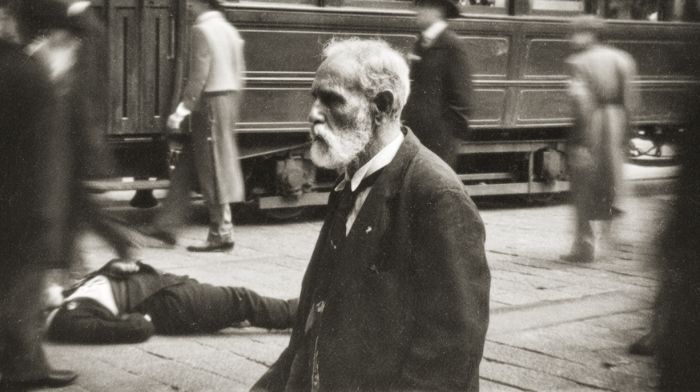
On June 7, 1926, Antoni Gaudí was walking, as he did every day, to the church of Sant Felip Neri, a familiar route in his later years. He was dressed with his characteristic extreme modesty, in simple, worn clothes, to the point that many Barcelonans didn't recognize him. As he crossed the Gran Via, a tram struck him with such force that he was instantly knocked unconscious. This episode, revisited with particular intensity today during the Gaudí centenary, It revealed the everyday vulnerability of a creator who had already transformed the city.
The tragedy was compounded by a misunderstanding that still surprises those who know his story: Gaudí was taken to the Hospital de la Santa Creu, a center for the poor, because his humble appearance led no one to suspect he was Barcelona's most brilliant architect. Only the following day, when colleagues and friends noticed his absence, was his identity discovered. The master died three days later, on June 10, 1926, without seeing the Sagrada Familia completed, the work that had absorbed more than forty years of his life and which today is central to many of the celebrations of [unclear - possibly "Eastern Day" or "Birthday"]. Gaudí centenary.
His funeral drew thousands of citizens, deeply moved to understand that this austere old man had shaped the visual soul of modern Barcelona. He was buried in the crypt of the Sagrada Familia, a symbolic destination perfectly suited to his life's work. There he rests surrounded by the geometries, spirituality, and light that defined his work and his way of understanding the world. His tomb has become a place of continuous homage, visited by millions who recognize in Gaudí a creator whose influence continues to grow a century later.
6. 2026: the centenary that Barcelona was waiting for
This year, Barcelona is full of activities to celebrate the Gaudí centenary:
- Exhibitions about his life and methods
- Concerts and cultural events surrounding the Sagrada Familia
- Themed guided tours
- Educational projects in museums and universities
A unique opportunity to understand Gaudí's life and legacy from the inside.
7. Why visit the Sagrada Familia with humor and context?
The Sagrada Familia is visually impressive, but understanding it transforms the experience.
In HL Comedy Tours We combine:
- Human stories behind the genius
- Real anecdotes told with humor
- Easy explanations of architectural symbols and details
Ideal for curious people and for those who already know the temple… but don't know why every stone matters.
8. Regular tours of the Sagrada Familia in 2026
This year, more than ever, the Holy Family asks to be understood.
Discover our regular tours with HL Comedy Tours:
- Avoid queues.
- Discover hidden secrets.
- Meet the human Gaudí behind the myth.
- Celebrate the centenary in style
Final reflection
Gaudí was not just an architect. He was a visionary who transformed faith, nature, and mathematics into an eternal work…
A work that continues to grow today, 100 years after his death.
Laugh at history, but with history. Book now at hlcomedytours.com either histary.es