


The San Sebastián that doesn't appear on postcards: stories of San Sebastián that explain everything else
When someone hears "San Sebastián", they usually think of pintxos, Michelin-starred chefs, elegant surfing, the smell of expensive sea salt and La Concha Beach in that impossible shade of blue that looks like Photoshop.
But what no one tells you is that beneath all that beauty lies a past of constant war, devastating fires, invasions, atrocities, and a popular humor built on spite and survival. stories of San Sebastián They're not just beautiful: they're a manual of resilience.
San Sebastián is not just a beautiful city.
It is a city that had to survive everything imaginable… and yet decided to continue to delight the world with its cuisine.
To truly understand it, one must look beyond the postcard image and delve into the stories of San Sebastián that explain how the San Sebastián we know today was built.
The city that burned and was reborn
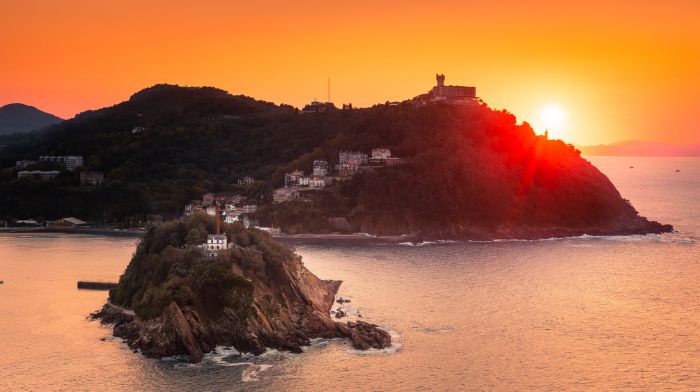
In 1813, in the midst of the War of Independence against Napoleon, San Sebastián experienced its most brutal episode. British and Portuguese troops entered the city to expel the French who had entrenched themselves on Mount Urgull.
Officially, they arrived as “liberators.” Unofficially, they left behind destruction that the city still remembers every August 31st.
Because they liberated... and then they looted.
And then they set it on fire.
For days.
- More than 80% of the city was destroyed.
- Thefts, abuses, and murders were reported.
- The civilian population was traumatized for generations.
Today, August 31st Street bears his name for a reason: it commemorates the exact day of the fire.
Only about 35 houses out of almost 600 were saved, in part of the current 31st of August Street (then called Trinity Street); tradition attributes this to the fact that allied officers were housed there.
Donostia literally rose from the ashes, inaugurating a cycle that would be repeated several times in its history: to destroy itself, to rebuild itself and to do it even better.
Invisible walls: the past of San Sebastián that all tourists walk on without knowing it
For centuries, San Sebastián was a military fortress enclosed behind a gigantic wall:
- over 12 meters high
- about 16 meters wide
- a perimeter that compressed the city into a small, dense, and controlled Old Town
The wall is gone, but its trace is everywhere. The past from San Sebastián remain beneath your feet:
- A red line on the ground marks its exact route.
- The Boulevard—that avenue that everyone crosses without thinking—is the space where the city opened up after demolishing it.
- Modern urban planning originated from the moment San Sebastián ceased to be a military prison.
When the wall fell in the 19th century, San Sebastián was freed, expanded and began to transform into an open, elegant, luminous city… and a magnet for tourists and aristocrats.
Walking through San Sebastián today is like walking through a vanished city.
And most people don't know it.
The key to the north: why everyone wanted to conquer San Sebastián
San Sebastián did not suffer attacks due to bad luck or because people from the north were especially attractive (which also played a part).
The reason was strategic:
- controlled the passage between France and Spain
- It dominated the Bay of Biscay
- It possessed a vital port for trade and war
That is why she was besieged by:
- French
- English
- Napoleonic troops
- armies during the Civil War
Even today, many facades in the city center still bear bullet and shrapnel holes, especially in buildings near the old town hall or in the Old Town.
For many tourists they are “decoration”.
For those who know San Sebastián, They are real scars.
Corsairs, whales and legal pirates: stories of San Sebastián from the sea
Long before it became a gastronomic capital, San Sebastián was a maritime capital. From its port sailed:
- whalers
- daring navigators
- privateers with royal letters of marque
Corsairs were, basically, pirates legalized by the crown.
If you stole from the enemy with permission, you were a hero.
If you did it without permission, you were a pirate.
It's that simple.
This seafaring past explains:
- the intimate relationship with the sea
- the importance of Saint Elmo, patron saint of sailors
- the maritime iconography scattered throughout San Sebastian
The stories from San Sebastián They are filled with ships, storms, enemy dams, and transatlantic routes that gave wealth and reputation to the city long before the arrival of gourmets.
The Tamborrada: where humor triumphs over the invader
Every January 20th, San Sebastián transforms into a drum festival that resonates day and night. The Tamborrada is a powerful, exciting, and above all, incredibly loud spectacle.
But its origin is a joke.
One of the best stories of San Sebastián.
Legend has it that the people of San Sebastián began to imitate and ridicule French parades using:
- kitchen utensils
- everyday clothes
- lots of wit and bad temper
What began as a parody ended up becoming a tradition. Today it is the most emblematic festival in San Sebastián.
And it demonstrates something essential:
In San Sebastián, humor is also historical memory.
Saints pierced by arrows and double names: Saint Sebastian in his most symbolic identity
San Sebastián has two names: Donostia and San Sebastián.
The Castilian version comes from the Roman martyr Sebastian, depicted:
- tied to a tree
- pierced by arrows
His figure presides over the Church of Santa María and other key points in the city.
This symbolism mixes:
- religion
- historical violence
- endurance
A perfect mix to understand the character of San Sebastián, always between solemnity, humor and survival.
From devastated city to “Little Paris”: stories of San Sebastián in its urban reinvention
After the fire of 1813 and the subsequent demolition of the city wall, San Sebastián reinvented itself with urban planning inspired by France:
- wide avenues
- elegant buildings
- aristocratic glamour
The old casino, which is now the town hall, was key to this transformation. Its revenues financed the construction of hotels, promenades, and public spaces that completely changed the city's image.
In a single generation, San Sebastián went from:
military post → elite destination
The Tales of Saint Sebastian They are full of this type of twist: total destruction followed by absolute sophistication.
Why these San Sebastián stories are best enjoyed with HL Comedy Tours
San Sebastián cannot be understood with a list of dates.
Not even with a map.
Not even with a pretty picture.
It is understood with:
- stories
- humor
- real context
- historical memory
- and a guide who tells you what never appears on Instagram
On the regular tour of HL Comedy Tours San Sebastian, We travel through:
- the Old Town
- its most symbolic streets
- her invisible scars
- their documented legends
- its corners full of historical irony
It's not an academic tour.
It's not a superficial tour.
It's San Sebastián told as it deserves: with rigor, emotion and intelligent laughter.
Laugh at history, but with history. Book now with HL Comedy Tours.